
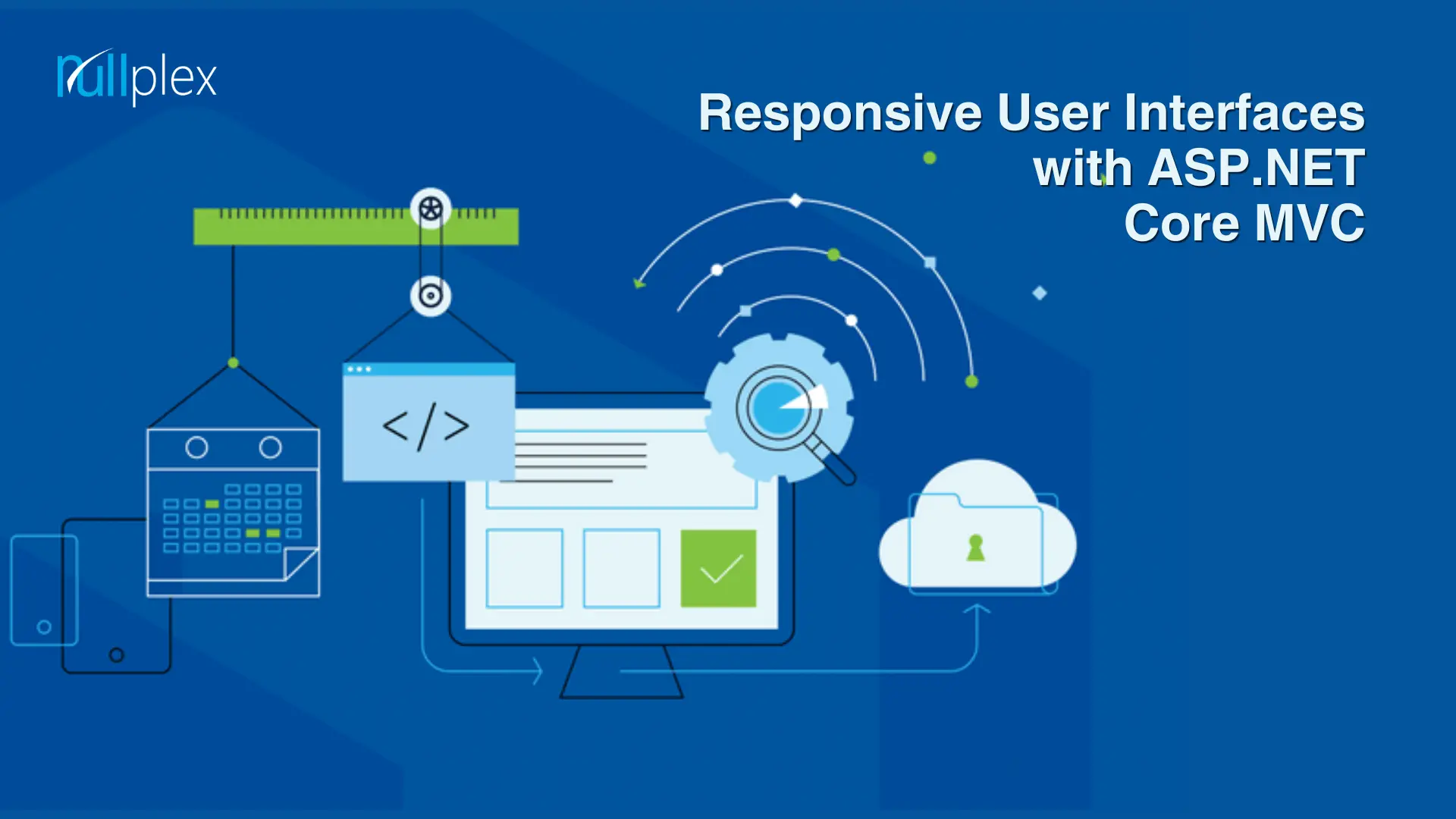
Developing Responsive User Interfaces with ASP.NET Core MVC

In today’s mobile-first world, creating responsive user interfaces (UIs) is essential for web applications. ASP.NET Core MVC provides powerful tools and frameworks that enable developers to build responsive, adaptive web applications that deliver seamless user experiences across devices.

Understanding Responsiveness
Responsiveness refers to a web application’s ability to adjust its layout and design to accommodate various screen sizes, orientations, and resolutions. 
A responsive UI enhances user experience by ensuring that content is easily accessible, regardless of the device used.

Key Techniques for Building Responsive UI

1. Use of CSS Frameworks
Integrating CSS frameworks like Bootstrap or Tailwind CSS into your ASP.NET Core MVC project simplifies the process of creating responsive layouts. 
These frameworks offer a grid system, responsive utilities, and pre-designed components that streamline development.

Grid System: Utilize a responsive grid layout to manage the placement of UI elements across different screen sizes.
Media Queries: Use CSS media queries to apply specific styles based on the device’s characteristics, such as screen width.

2. ASP.NET Core Tag Helpers
ASP.NET Core MVC provides tag helpers that allow you to generate HTML elements with server-side logic easily. Use tag helpers to create forms, 
navigation menus, and other interactive elements that adapt based on user interactions.

Form Tag Helpers: Simplify the creation of forms that are responsive and user-friendly, ensuring input elements scale appropriately on all devices.
Anchor Tag Helpers: Enhance navigation links with tag helpers that maintain the structure and integrity of your application’s routing.

3. JavaScript and AJAX
Incorporating JavaScript and AJAX into your ASP.NET Core MVC applications allows for dynamic content loading and improved user interactions without 
refreshing the entire page.

AJAX Calls: Use AJAX to load data asynchronously, enhancing the responsiveness of your application and providing a better user experience.
JavaScript Libraries: Leverage libraries like jQuery or vanilla JavaScript for DOM manipulation, enabling interactive features that adapt to user actions seamlessly.

Best Practices for Responsive UI Development
1. Mobile-First Approach: Start designing for mobile devices before scaling up to larger screens. This ensures that your application prioritizes essential features for smaller displays.

2. Testing Across Devices: Regularly test your application on various devices and screen sizes to identify layout issues and ensure consistent user experiences.

3. Optimize Images and Assets: Use responsive images and optimize asset delivery to improve loading times and performance on different devices.

Conclusion
Developing responsive user interfaces with ASP.NET Core MVC is vital for creating modern web applications that cater to diverse user needs. By leveraging CSS frameworks, tag helpers, and JavaScript, developers can build dynamic, user-friendly applications that deliver exceptional experiences across all devices. Embracing best practices will further, enhance responsiveness and ensure your application stands out in today’s competitive landscape.
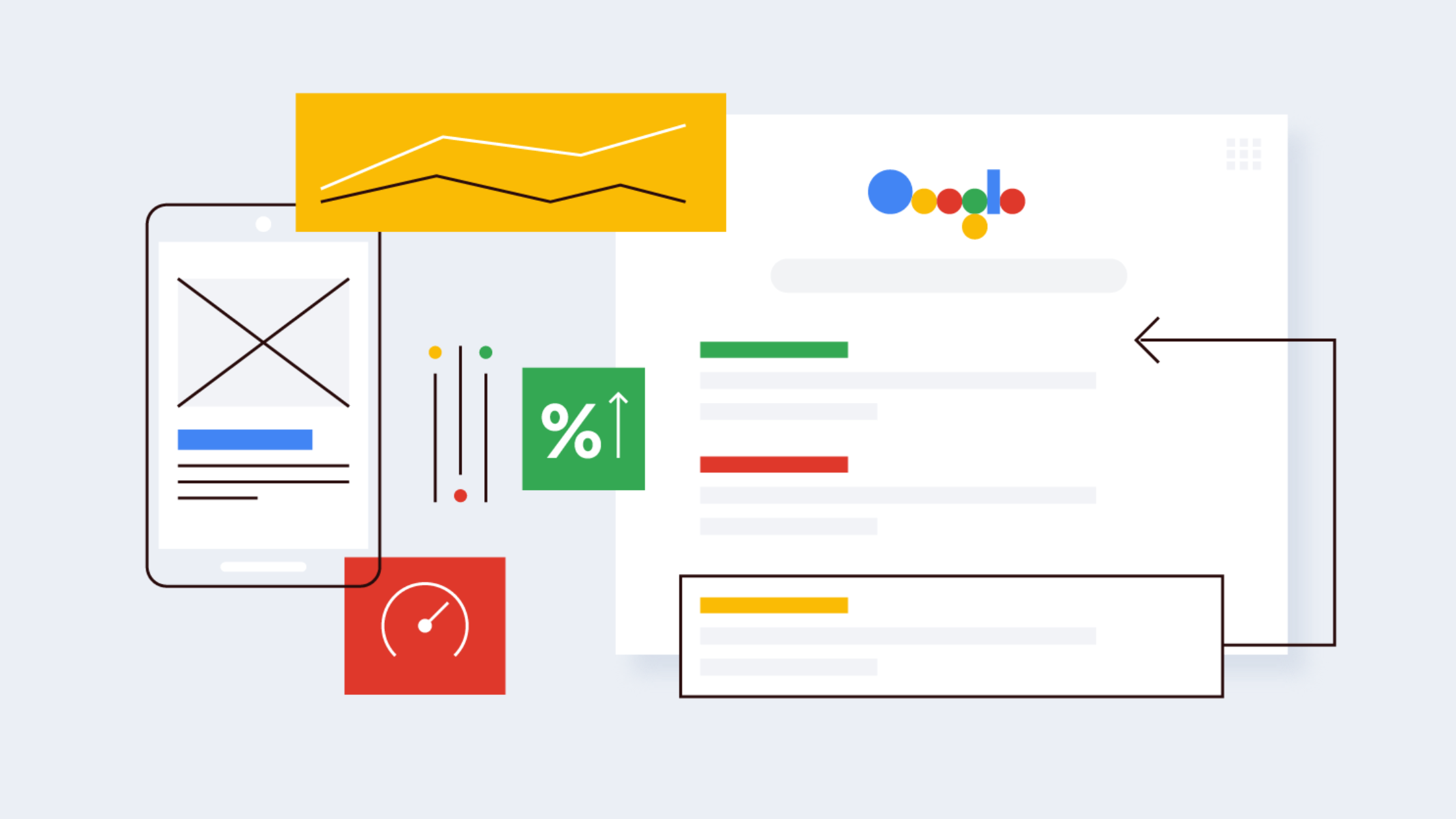

How Do I Get My Website to Rank on Google?

If you have a website, you likely want it to appear on the first page of Google search results. After all, the higher your website ranks, the more likely it is that people will find and click on it. But with so many websites out there, how do you make sure yours stands out? Here are some tips to help you improve your website’s ranking on Google. 

  1. Develop a website: 
    Hire a trusted digital agency dealing in website development. Make sure that your website should be visible on all mobile and desktops. Check out how to design responsive a website.


  2. Research relevant keywords 
    Before you start optimizing your website for search engines, you need to figure out what keywords people are using to search for your content. Use tools like Google Keyword Planner, SEMrush, or Ahrefs to find relevant keywords and phrases that you can use throughout your website.


  3. Optimize your website for those keywords 
    Once you have a list of relevant keywords, it’s time to optimize your website for them. Check it out on our SEO page. Make sure that your website content, including headlines, meta descriptions, and image alt tags, includes these keywords. But be careful not to overdo it – Google penalizes websites that use too many keywords.


  4. Publish high-quality content
    One of the most important factors in ranking on Google is the quality of your website content. Make sure that you’re publishing high-quality, relevant content on a regular basis. This will not only keep your visitors engaged but also signal to Google that your website is an authoritative source of information.


  5. Get backlinks
    Backlinks are links from other websites that point to your website. The more high-quality backlinks you have, the more likely it is that Google will consider your website to be an authority in your niche. Reach out to other website owners and ask if they would be willing to link to your website.


  6. Use social media to promote your website
    Social media can be a powerful tool for driving traffic to your website. Share your content on social media platforms like Facebook, Twitter, and LinkedIn. This will not only help you reach a wider audience but also signal to Google that your website is popular and relevant. Check out here how you can do Social Media Marketing


  7. Improve your website’s speed
    Google takes website speed into account when ranking websites. Make sure that your website loads quickly by optimizing images, minimizing code, and using a fast web host.


  8. Use Google My Business
    Google My Business is a free tool that allows you to manage your business information across Google, including in search results and Google Maps. Make sure that your business information is up to date and that you’re using relevant keywords in your description. 


By following these tips, you can improve your website’s ranking on Google and increase your visibility to potential visitors. Keep in mind that SEO is an ongoing process, so it’s important to continue monitoring and optimizing your website over time. 

Importance of Having A Website For A Startup Business

  1. Online Presence:
    In today’s digital age, having an online presence is vital for any business. A website allows you to have a 24/7 online presence and reach out to potential customers from different parts of the world. Even if your start-up business is small, having a website gives you a professional image that can attract customers and investors.


  2. Increased Credibility:
    A professional-looking website can increase your credibility as a start-up business. Potential customers are likely to trust a business that has a well-designed website with relevant information. A website can also help you showcase your products or services, customer testimonials, and your mission and vision.


  3. Marketing:
    A website is a great marketing tool for a start-up business. You can use your website to promote your products or services and reach out to potential customers. Additionally, you can integrate your website with social media platforms to increase your online presence.


  4. Customer Support:
    A website can also serve as a platform for customer support. You can include a contact form or chatbot on your website to address customer inquiries and concerns. This can help you build a loyal customer base and improve your customer service.


  5. Analytics:
    A website allows you to track user behavior and analyze the effectiveness of your marketing campaigns. With tools like Google Analytics, you can monitor your website traffic, see which pages are popular, and track conversion rates. This information can help you make data-driven decisions to improve your website and marketing strategies. 


In conclusion, having a website for your start-up business is essential. It can help you reach out to potential customers, increase your credibility, and promote your products or services. A website is also cost-effective and can serve as a platform for customer support and marketing. Don’t let your start-up business fall behind the competition, build a website today.

ASP.NET Web API vs ASP.NET Rest API

What is Web API?

Web API is considered the most uncomplicated and easy-to-develop and manage application programming interface. 
It’s used for building a resource-sharing connection between a server and a client device. 
For instance, if you are accessing a website from your laptop’s browser, an API is being used to transfer user requests, server acknowledgments, and files.


Web API can be developed using some popular web development technologies, such as .NET, ASP.NET, and Java. 
Mainly, if any enterprise wants to use a Web API, collaborating with an ASP.NET development company like Nullplex Software Private Limited is highly preferred.

Benefits of Web API

1) Easy Utilization

Among all the APIs, Web API is the easiest to develop, configure and maintain. You don’t need any additional infrastructure or resources for it, 
as a .NET developer can effortlessly curate it. 
Also, they are open-source, which means that they can be customized and comply with the required standards.

2) Lightweight

The lightweight architecture of web API leverages companies to provide services to users with lower bandwidth devices. 
It doesn’t put additional load on the client device/browser and ensures the offer of all the services with utmost quality and accuracy.

3) No Additional Dependency Required

Web API is an integral component of the ASP.NET framework. Due to this, you don’t need to avail of any additional dependency for the API development and maintenance. 
Also, it helps to reduce complexity and centralize business logic for better productivity, performance, and stability.

4) Affordable Development

Creating Web API is quite affordable compared to REST API development, configuration, and maintenance. 
You can hire ASP Dot Net Core developers within your budget through outsourcing companies, and it will only cost you between US$18/hour to US$60/hour per expertise, project size, and team.


Examples of Web API

1) ChatGPT API

ChatGPT is an AI model based on NLP (Natural Language Processing). Its API is used to enhance the chatbot functionality. 
Organizations train about their product and implement it on their customer support interface. 
Further, whenever a customer asks a question or queries about a technical problem or product, the ChatGPT API takes the input, provides it to the backend system, and returns the output.

2) Google Maps API

Google Maps API can be commonly seen everywhere. Most organizations and applications use it to provide location-based services. 
When you use Snapchat, Ola and similar the map showcased on the application is due to Google Maps API.
This API connects the application and Google Maps to offer the functionality to share location and track someone’s location in real-time.

3) PayPal API

The option to pay on an eCommerce using the PayPal account is mainly an API, which connects the users to the PayPal platform. 
When a user clicks on the PayPal checkout or similar option, the API sends the request and redirects the user to the PayPal platform. 
Further, when the transaction is completed, API takes the status and updates it on the eCommerce website.

What is Rest API?

REST is not an API like Web API, but it’s an architecture used to develop Application Programming Interface. 
It helps you create a web service that establishes and maintains connections between systems, enabling them to communicate. 
The APIs built using the REST architecture are known as RESTful APIs and nowadays, they are most used in enterprise management applications.


Benefits of Rest API

1) Effortless Scalability

You can quickly scale up REST APIs by creating new endpoints. 
It benefits the developers to create complex logic quickly and streamline the request and response flow between the client and server devices.

2) Data Security

SSL-level encryption retains data integrity and confidentiality while using the REST API. 
It ensures that each bit is secured and illegitimate actors are prevented from accessing, reading, and modifying the data in the transmission channel.

3) Adaptability and Performance

REST API is faster than web services and API. It enables the synchronization of data from multiple websites and databases. 
In addition, it can be used to transfer data between servers and modify it using HTTP methods.

4) Utilize HTTP Methods

REST API enables HTTP methods – GET, PATCH, DELETE, PUT, POST, TRACE, HEADS, and OPTIONS. 
All these methods help the developers to create logic and build appropriate API functions impeccably. 
Also, while troubleshooting the methods help in easy root cause identification.


Examples of Rest API

1) Twitter REST API

The Twitter REST API leverages the developers to use their identification mechanism. 
You must have seen websites and applications with the functionality to log in using your Twitter account. 
It’s due to the API that integrates the website and Twitter. 
In addition, the API also enables the display of tweets per hashtags and location on other apps using the API.

2) Instagram REST API

The Instagram REST API enables you to access and utilize profile data on your application. 
It helps the organization showcase its website social media posts without redirecting users. 
In addition, Graph API benefits can also be availed with it to track the account metrics and precisely handle Instagram activities.

3) Amazon REST API

Amazon REST API is most popular among developers looking to integrate artificial intelligence, machine learning, and data science capabilities in software. 
The API ensures a secure communication channel between the app and the Amazon cloud service, supporting and running the AI mechanisms. 
As a result, the developers save on cost, time, effort, and infrastructure to support AI.

7 Elements That Influence Conversions in Education Web Design 

  1. Clear value proposition
    The value proposition of an education website should be clear and compelling. Visitors should be able to quickly understand what sets the institution apart from its competitors. Use concise and persuasive language to communicate your value proposition, such as “Get the hands-on experience you need to succeed in your career.”


  2. Relevant images and videos
    Images and videos are powerful tools for showcasing an educational institution’s offerings. Use high-quality images and videos that accurately represent the institution and its programs. Include images of campus life, classrooms, and faculty members, as well as videos that provide an inside look at programs and experiences.


  3. Calls to action
    Calls to action (CTAs) are buttons or links that encourage visitors to take a specific action, such as “Apply Now” or “Schedule a Visit”. Use clear and prominent CTAs throughout the website, making it easy for visitors to take the next step in the enrollment process.


  4. Social proof
    Social proof is the idea that people are influenced by the opinions and actions of others. Use testimonials from current and former students, faculty members, and alumni to demonstrate the value of the institution. Additionally, include social media feeds to showcase the institution’s engagement and community.


Call, Apply, Bind – Understanding Basic Concepts of JavaScript

In programming languages, you have a this keyword. The “this” keyword lets you refer to an object from within that object. “this”‘s value will change depending on the context that “this” is called in. By default it refers to the global scope, but when called within a function, it refers to that function.

Note – To understand call, apply, and bind you need to have good knowledge of how “this” works in JavaScript.

call(), apply(), and bind() can refer “this” to object.

 This let’s you to change the context of this when you invoke the function. It depends on how we are invoking the function.

1) Call:

Call method takes input as an String args comma seperated. call() provides a new value of this to the function/method. With call(), you can write a method once and then inherit it in another object, without having to rewrite the method for the new object.

                ex –

                const commonMethods = {

    fullname : function(city,state){

        return this.fname + ” ” + this.lname + ” Lives in ” + city + ” – ” + state;

    }

                }

                const Hero_1 = {

                    fname : “Tony”,

                    lname : “Stark”

                };

                const Hero_2 = {

                    fname : “Steve”,

                    lname : “Rogers”

                }

                const Hero_1_Details = commonMethods.fullname.call(Hero_1,”Malibu Point”,”USA”);

                const Hero_2_Details = commonMethods.fullname.call(Hero_2,”Washington, D.C.”,”USA”);

                console.log(Hero_1_Details);

                console.log(Hero_2_Details);


2) Apply:

It is same as call but different in passing the arguments in. The apply() method calls the specified function with a given this value, and arguments provided as an array (or an array-like object). apply() accepts a single array of arguments — for example, func.apply(this, [‘eat’, ‘bananas’]);

                ex :

                                const commonMethods = {

    fullname : function(city,state){

        return this.fname + ” ” + this.lname + ” Lives in ” + city + ” – ” + state;

    }

                }

                const Hero_1 = {

                    fname : “Tony”,

                    lname : “Stark”

                };

                const Hero_2 = {

                    fname : “Steve”,

                    lname : “Rogers”

                }

                const Hero_1_Details = commonMethods.fullname.apply(Hero_1,[“Malibu Point”,”USA”]);

                const Hero_2_Details = commonMethods.fullname.apply(Hero_2,[“Washington, D.C.”,”USA”]);

                console.log(Hero_1_Details);

                console.log(Hero_2_Details);


3) Bind:

The bind() method creates a new function that, when called, has its this keyword set to the provided value, with a given sequence of arguments preceding any provided when the new function is called. With the bind() method, an object can borrow a method from another object.

                const Hero_1 = {

                    fname : “Tony”,

                    lname : “Stark”,

                    fullname : function(city,state){

                        return this.fname + ” ” + this.lname + ” Lives in ” + city + ” – ” + state;

                    }

                };

                const Hero_2 = {

                    fname : “Steve”,

                    lname : “Rogers”,

                    showSuperPower : function(power){

                        return `Super Power is ${power}`

                    }

                }

                // here we have interchanged the function of each other. (showSuperPower and fullname)

                const Hero_2_Details = Hero_1.fullname.bind(Hero_2);

                console.log(Hero_2_Details(“Washington, D.C.”,”USA”));

                // Or

                const Hero_1_Details = Hero_2.showSuperPower.bind(Hero_1);

                console.log(Hero_1.fullname(“Malibu Point”,”USA”) + ” – and ” +Hero_1_Details(“Can Fly”));


Pros of using call apply bind:

  1. Code duplication removed.
  2. We can create a new function and bind with existing.
  3. Readability improves.

Cons of using call apply bind:

Basic concepts of Scops and “this” keyword must be strong else find hard to read and debug

Conclusion:

From the article, we’ve explored the foundational concepts of JavaScript. We’ll be adding more articles soon to delve deeper into the subject.

Thank you for reading!

Career Hire Us
Request Callback

Got An Idea?

Let’s Build It.

Tell us what you need, and our team will guide you from concept to launch with clarity, speed, and expert care.