The Essentials of Web Development: From Basics to Advanced Techniques

Web development has evolved significantly over the years, driven by technological advancements and changing user expectations. To create a website that stands out and offers an exceptional user experience, developers need to incorporate several key features into their projects. Here’s an overview of the essential features of modern web development.

  1. Responsive Design

Responsive design is no longer optional with the variety of devices used to access the web, from smartphones to desktops. A responsive website automatically adjusts its layout and content to fit the screen size and resolution of the device, ensuring a seamless experience for all users.

  • Mobile-First Approach: Prioritize designing for mobile devices first, then scale up for larger screens. This ensures that the website is optimized for the smallest screens, which is critical given the increasing use of mobile devices.
  • Flexbox and Grid Layouts: Utilize CSS Flexbox and Grid layouts to create flexible, responsive layouts that can adapt to different screen sizes and orientations.


  1. Fast Loading Speed

Website speed is a critical factor in user experience and SEO rankings. Users expect websites to load quickly, and a delay of even a few seconds can lead to higher bounce rates and lost conversions.

  • Optimized Images: Compress images without sacrificing quality to reduce load times. Use modern formats like WebP for better compression.
  • Minification and Compression: Minify CSS, JavaScript, and HTML files and enable Gzip compression to reduce the size of the files sent to the browser.
  • Content Delivery Network (CDN): Utilize a CDN to serve content from servers closer to the user, reducing latency and improving load times.


  1. Progressive Web Apps (PWAs)

Progressive Web Apps combine the best of web and mobile apps, providing an app-like experience on the web. PWAs can work offline, send push notifications, and be installed on a user’s device, making them highly engaging and reliable.

  • Service Workers: Implement service workers to manage caching and offline functionality, ensuring the app remains usable even without an internet connection.
  • Push Notifications: Use push notifications to engage users and bring them back to the app with timely updates and alerts.


  1. Security Features

With the increasing number of cyber threats, security is a top priority in web development. Protecting user data and ensuring the website’s integrity are essential to building trust with your audience.

  • HTTPS and SSL Certificates: Ensure all data transmitted between the user and the server is encrypted using HTTPS and SSL certificates.
  • Regular Security Audits: Conduct regular security audits and vulnerability assessments to identify and fix potential weaknesses on the website.
  • Data Encryption: Encrypt sensitive data, both at rest and in transit, to protect it from unauthorized access.


  1. Search Engine Optimization (SEO)

Search Engine Optimization is critical for driving organic traffic to your website. Implementing SEO best practices during development ensures that your website is discoverable by search engines.

  • Clean URL Structure: Use clean, descriptive URLs that reflect the content of the page and are easy for users and search engines to understand.
  • Meta Tags and Schema Markup: Include relevant meta tags, such as title, description, and keywords, and implement schema markup to help search engines understand your content better.
  • Fast Load Times: As mentioned earlier, fast load times are crucial for SEO, as search engines prioritize websites that offer a quick, efficient user experience.

  1. User-Friendly Navigation

Navigation is the backbone of a website’s user experience. Intuitive, well-organized navigation helps users find the information they need quickly and easily.

  • Clear Menu Structure: Organize the menu in a logical hierarchy, with categories and subcategories that make sense to the user.
  • Search Functionality: Implement a robust search function to help users find specific content quickly, especially on content-rich websites.
  • Breadcrumbs: Use breadcrumbs to provide users with a clear path to navigate back to previous pages or higher-level categories.


  1. Cross-Browser Compatibility

Users access websites from a variety of browsers and ensuring that your website functions correctly across all major browsers is essential.

  • Testing: Test your website on different browsers and versions to identify and fix compatibility issues.
  • Polyfills and Vendor Prefixes: Use poyfills and vendor prefixes to ensure that modern CSS and JavaScript features work in older browsers.


  1. Accessibility

Web accessibility ensures that your website is usable by people with disabilities. An accessible website not only meets legal requirements but also expands your audience.

  • ARIA Landmarks and Roles: Use ARIA (Accessible Rich Internet Applications) landmarks and roles to improve navigation for users relying on screen readers.
  • Keyboard Navigation: Ensure that all interactive elements can be accessed and used with a keyboard, providing an alternative to mouse navigation.
  • Color Contrast: Use sufficient color contrast to make text readable for users with visual impairments.


  1. Scalability

As your website grows, it should be able to handle increased traffic, content, and user interactions without compromising performance.

  • Modular Architecture: Use a modular architecture to ensure that your website can be easily scaled and maintained as it grows.
  • Load Balancing: Implement load balancing to distribute traffic across multiple servers, ensuring that your website remains responsive under heavy load.
  • Database Optimization: Optimize your database queries and structure to handle large amounts of data efficiently.


  1. Content Management System (CMS) Integration

A robust CMS allows non-technical users to manage and update content on the website easily, without needing to touch the code.

  • Popular CMS Options: WordPress, Drupal, and Joomla are popular CMS options that offer flexibility and a wide range of features.
  • Custom CMS Development: For more complex requirements, consider developing a custom CMS tailored to the specific needs of your website.


Conclusion

Modern web development is about creating websites that are fast, secure, user-friendly, and adaptable to different devices and user needs. By incorporating these key features, you can ensure that your website not only meets current standards but also delivers an exceptional experience for your users, helping your business stand out in a crowded digital landscape.

Tech Partnership: An Intriguing Alternative to Hiring In-House Developers

As a Business Development Executive, I have witnessed firsthand the evolving landscape of the tech industry. Companies are constantly searching for innovative ways to stay competitive, and one of the most significant decisions they face is whether to hire in-house developers or seek alternative solutions. In this context, tech partnerships have emerged as a compelling alternative to traditional in-house development teams. Here’s why tech partnerships are worth considering:

  1. Access to a Broader Talent Pool

One of the primary advantages of tech partnerships is access to a vast, diverse talent pool. In-house hiring often limits you to local or regional talent, which may not always meet the specific needs of your projects. Tech partnerships, on the other hand, allow you to tap into a global network of developers with specialized skills and experiences. This not only enhances the quality of your projects but also introduces fresh perspectives and innovative solutions.

  1. Cost Efficiency

Hiring in-house developers comes with significant costs, including salaries, benefits, office space, and training. These expenses can quickly add up, especially for small and medium-sized enterprises. Tech partnerships offer a more cost-effective solution by allowing companies to scale their development teams based on project needs. You only pay for the services you use, which can result in substantial savings without compromising on quality.

  1. Flexibility and Scalability

The ability to scale your development team up or down based on project requirements is a crucial advantage of tech partnerships. In-house teams are often fixed in size, making it challenging to adjust to varying workloads. Tech partnerships provide the flexibility to quickly add or reduce resources as needed, ensuring that your projects remain on track and within budget.

  1. Focus on Core Business Activities

Managing an in-house development team requires significant time and effort, from recruitment and training to daily supervision. This can divert attention from your core business activities. By partnering with a tech firm, you can offload the complexities of development management, allowing your team to focus on strategic initiatives and business growth.

  1. Access to Latest Technologies and Best Practices

Tech partners are often at the forefront of technological advancements, continuously updating their skills and adopting the latest industry practices. Partnering with such firms ensures that your projects benefit from cutting-edge technologies and methodologies. This can give your business a competitive edge, ensuring that your products and services remain relevant and innovative.

  1. Risk Mitigation

Tech partnerships can also help mitigate risks associated with development projects. Established tech firms have robust processes and quality assurance measures in place, reducing the likelihood of errors and delays. Additionally, many tech partners offer contractual guarantees and service-level agreements (SLAs), providing security and peace of mind.

  1. Rapid Time-to-Market

In today’s fast-paced market, speed is of the essence. Tech partnerships can accelerate your time-to-market by leveraging the expertise and resources of your partner firm. Their experience managing similar projects can streamline development processes, resulting in quicker delivery times and a faster realization of business value.

  1. Enhanced Innovation and Collaboration

Collaboration with a tech partner can foster a culture of innovation within your organization. Exposure to different working styles and innovative solutions can inspire your team to think creatively and explore new ideas. This collaborative environment can lead to breakthrough innovations that set your business apart.

In conclusion, tech partnerships offer a compelling alternative to hiring in-house developers. They provide access to a diverse talent pool, cost efficiency, flexibility, and the latest technologies, all while allowing your team to focus on core business activities. By mitigating risks and accelerating time-to-market, tech partnerships can drive your business toward greater innovation and success.

As a business development executive, I have seen the transformative impact that tech partnerships can have on businesses. By embracing this model, companies can unlock new opportunities, enhance their competitive edge, and achieve their strategic goals more effectively. If you’re looking to propel your business forward, it might be time to consider the power of tech partnerships.

– Neha Sonar

Understanding Promises in JavaScript: A Comprehensive Guide

Promises give us the option to perform asynchronous computation easily and more simply.

before Promises callbacks were used which leads to callback Hell,

to overcome this Problem Promises were introduced. 

Example of promises

const timer = time => new Promise((resolve,reject)=> setTimeout(resolve(“promise is resolved.”),time));

timer(3000)

.then((val)=> console.log(“Timer executeds — “+val))

.catch((err)=> console.log(” promise is rejected — “+err))

.finally(()=>console.log(“Promise is closed”))

Promise consists of 3 state of execution –

  1. Before the result is ready, the Promise is pending.
  2. If a result is available, the Promise is fulfilled.
  3. If an error happens, the Promise is rejected.

Note: A Promise is settled if inside function logic is executed. (if it is either fulfilled or rejected). only once the promise is settled.

Inside the promise, there are two operations to change the state. After you have invoked either one of them once.

  1. resolve – promise has been executed properly.
  2. reject – promise has been rejected.

How to consume the promises –

    .then() block handle the resolved output by promises.

    .error() block catch the error if the rejected state is sent by promise.

    .finally() block execute every time of resolve or reject of promise.

    Note – promise chaining is the concept where we can handle the resolved output by promises. in multiple. then blocks.

            .then()

            .then()

            .then()

What if we have multiple promises –

    There are methods provided by promises to handle all at once.

  • Promise.all() –  it is static method takes an iterable of promises as input and returns a single Promise when all promises are fulfilled.

const promise1 = Promise.resolve(1);

const promise2 = Promise.resolve(2);

const promise3 = Promise.resolve(3);

Promise.all([promise1,promise2,promise3]).then((values)=>{

    console.log(“all promises values – “,values);

})

  • Promise.allSettled() – it is static method takes an iterable of promises as input and returns a single Promise when all promises are settled. ( either it may resolve or reject. )

const promise4 = Promise.resolve(4);

const promise5 = Promise.resolve(5);

const promise6 = Promise.reject(6);

Promise.allSettled([promise4,promise5,promise6]).then((values)=>{

    console.log(“all promises values – “,values);

})

  • Promise.any() = static method takes an iterable of promises as input and returns a single Promise.

    This returned promise is fulfilled when any of the input’s promises are fulfilled, with this first fulfillment value.

   note – if any one of the rejected promises comes then also it will give output.

const promise7 = Promise.reject(0);

const promise8 = new Promise((resolve) => setTimeout(resolve, 100, ‘quick’));

const promise9 = new Promise((resolve) => setTimeout(resolve, 500, ‘slow’));

Promise.any([promise7,promise8,promise9]).then((values)=>{

    console.log(“all promises values – “,values);

})

  • Promise.race() = static method takes an iterable of promises as input and returns a single Promise.

    This returned promise settles with the eventual state of the first promise that settles

    note – if any one of the rejected promises comes then also it will give error.

// const promise11 = Promise.reject(0);

const promise11 = new Promise((resolve) => setTimeout(resolve, 100, ‘quick’));

const promise12 = new Promise((resolve) => setTimeout(resolve, 500, ‘slow’));

Promise.race([promise11,promise12]).then((values)=>{

    console.log(“all promises values – “,values);

})

basically both below used to This function flattens nested layers of promises.

Promise.resolve() – return promise resolve with value.

Promise.reject() – return the promise rejected.

Advantages of promises:

  1. Easy to Read Code and maintain.
  2. Advantage over callbacks.
  3. can handle multiple asynchronous tasks.

Disadvantages of promises:

  1. Complex Error Handling.
  2. For beginners it will create confusion.
  3. Hard Debugging error.

At the end – Promises is a Great Tool to handle Async Tasks. By using Async await we can handle Promises a lot easy way.

Managing and maintaining a database structure for a global technologies

Steps for Managing and maintaining a database structure for a global technologies:

  1. Database Design and Architecture
  • Scalability: Design your database to handle growth in data volume, user load, and geographic distribution. Use techniques like sharding, partitioning, and data replication.

  • Redundancy and High Availability: Ensure your database is always available by implementing failover mechanisms, redundant systems, and backup strategies.

  • Data Modeling: Use a robust data model that accommodates future growth and changes. Normalize data to eliminate redundancy, but also denormalize where necessary to optimize read performance.


  1. Technology Selection
  • Database Management Systems (DBMS): Choose a DBMS that fits your needs. Relational databases like MySQL, PostgreSQL, and SQL Server are great for structured data, while NoSQL databases like MongoDB, Cassandra, and Redis are suitable for unstructured data.

  • Cloud Solutions: Consider using cloud-based databases like AWS RDS, Google Cloud SQL, or Azure SQL Database for their scalability, security, and managed services.


  1. Global Distribution and Replication
  • Geographical Distribution: Use geographically distributed databases to reduce latency and improve performance for users worldwide. Techniques include data replication and distribution across multiple data centers.

  • Consistency Models: Choose the right consistency model (e.g., eventual consistency vs. strong consistency) based on your application needs and user expectations.


  1. Security and Compliance
  • Data Encryption: Implement encryption at rest and in transit to protect data from unauthorized access.

  • Access Control: Use role-based access control (RBAC) to ensure only authorized personnel can access sensitive data.

  • Compliance: Adhere to international regulations such as GDPR, CCPA, and HIPAA to ensure data privacy and security.


  1. Performance Optimization
  • Indexing: Use appropriate indexing strategies to speed up query performance.

  • Query Optimization: Regularly analyze and optimize queries to reduce load and improve response times.

  • Caching: Implement caching strategies to reduce database load and improve performance.


  1. Monitoring and Maintenance
  • Monitoring Tools: Use monitoring tools like Nagios, Prometheus, or cloud-native solutions to track database performance, health, and usage.

  • Regular Maintenance: Perform regular maintenance tasks such as vacuuming, reindexing, and log management.

  • Alerting: Set up alerts for key performance metrics and potential issues to enable proactive maintenance.


  1. Backup and Recovery
  • Regular Backups: Schedule regular backups and ensure they are stored securely and tested periodically for integrity.

  • Disaster Recovery Plan: Develop and test a comprehensive disaster recovery plan to ensure business continuity in case of data loss or corruption.


  1. Documentation and Training
  • Documentation: Maintain thorough documentation of the database structure, configurations, and maintenance procedures.

  • Training: Regularly train your database administrators and developers on best practices and new technologies.

  1. Version Control and CI/CD
  • Version Control: Use version control systems like Git to manage database schema changes.
  • CI/CD Pipelines: Implement continuous integration and continuous deployment pipelines to automate testing and deployment of database changes.

Conclusion

Managing and maintaining a database structure for global technology requires a multifaceted approach that balances scalability, performance, security, and compliance. By focusing on key areas such as robust database design and architecture, appropriate technology selection, and effective global distribution and replication strategies, you can ensure that your database infrastructure can handle growth and provide high availability.

– Madhuri Bankar.

Developer Dependency: A Key Element in Project Execution

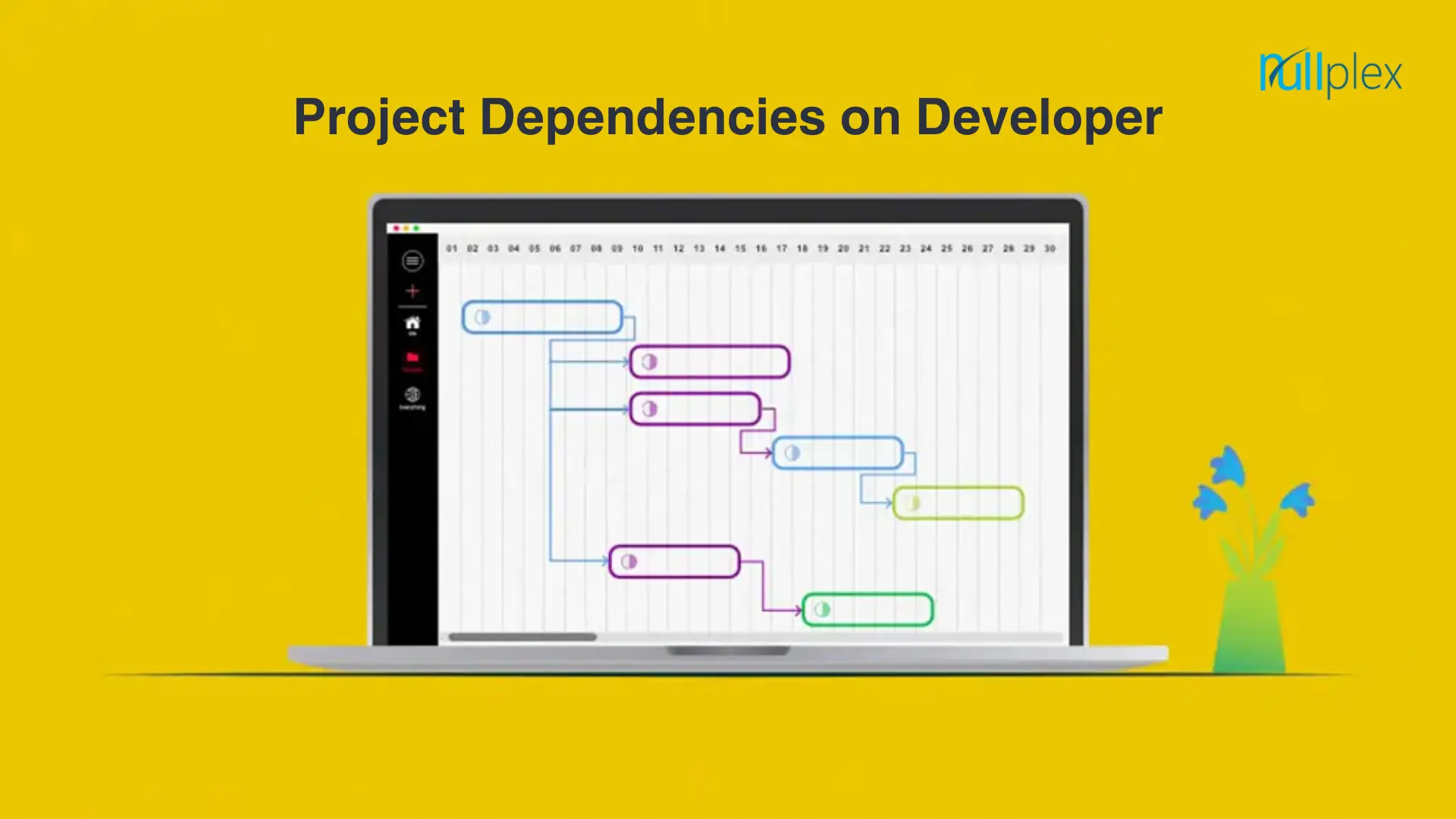
Project dependencies refer to the relationships between tasks or activities within a project, where the completion or timing of one task depends on the completion of another.

Types of Project Dependencies

  1. Logical dependencies

Logical or causal dependencies are quintessential to project management and cannot be avoided as they are necessary for project completion.

Tasks with logical dependencies cannot be performed simultaneously. Without completing a preceding task, the succeeding task cannot be started.

Example – You cannot publish a blog on your website straight away. It has to be written, reviewed, and edited before it is ready to be published.

  1. Cross-team dependencies

Cross-team dependencies are commonly witnessed in large-scale organizations where teams from different departments work together to complete a single complex project. In this case, teams depend on each other to achieve a common goal i.e. timely project completion and delivery.

  1. Discretionary dependencies

Discretionary dependencies, also known as preferred or soft logic dependencies, are those that are at the discretion of project teams, other stakeholders, and best industrial practices. These are not necessary for project completion but can help improve the quality of project deliverables.

  1. Internal dependencies

Internal project dependencies are those that project teams have complete control over and there’s no dependence on outside parties. Internal dependencies are when two tasks or activities within the same project are dependent on each other and there’s no reference to external projects and activities.

Example – The Quality Analyst team is not in a position to test software until the development process is finished.

  1. External dependencies

Opposite to internal dependencies, external dependencies are those when project teams have no control over external factors and are not in a position to do anything to escalate the project’s progress.

Although most project activities are controlled by internal teams. Many external factors can affect the progress of the projects such as client approval, vendors, tools, and others.

Example – A project team cannot start working on a project until the client (external party) gives the go-ahead to the team. In this case, a project team is dependent on external parties i.e. client to start working on a project.

Task dependencies in project management :

Finish to Start (FtS)

This task dependency is the most prevalent. Task A must be finished before Task B can begin.

Finish to Finish (FtF)

Before Task A is finished, Task B cannot be finished. This frequently occurs with tasks that have subtasks.

Start to Start (StS)

Task B cannot begin until Task A begins under this model. These are for tasks that need to be completed concurrently.

Start to Finish (StF)

For Task A to be finished, Task B must begin. This is crucial in circumstances where there must be overlap.

Conclusion :

Also, weekly assigned tasks will make it easier for the reviewing party to provide feedback in a more timely manner.

Weekly goals will help you focus on little portions of the projects, minuscule tasks that can be mapped out beforehand according to their urgency and priority.

These goals will help the team focus more on the task at hand. Therefore, there is no chance that they would get overwhelmed by the pressure of the upcoming tasks.

The Benefits of Using Front-End Frameworks in Web Development

Front-end frameworks are powerful tools used by web developers to streamline the process of building complex, interactive, and responsive web applications. Here are several reasons why using a front-end framework is advantageous:

  1. Efficiency and Speed

Reusable Components: Front-end frameworks provide a library of reusable components (e.g., buttons, forms, modals) that developers can quickly integrate into their projects, saving time on design and implementation.

Pre-built Functionality: Many frameworks come with pre-built functionalities and patterns for common tasks such as data binding, form validation, and routing, reducing the amount of code developers need to write from scratch.

  1. Consistency and Standardization

Unified Codebase: Using a framework ensures that the codebase follows a consistent structure and coding standards, making it easier for multiple developers to work on the same project.

Best Practices: Frameworks often enforce best practices in web development, helping developers avoid common pitfalls and write more maintainable code.

  1. Responsive Design

Mobile-Friendly: Modern front-end frameworks like Bootstrap and Foundation are designed with mobile-first principles, ensuring that web applications are responsive and work well on a variety of devices and screen sizes.

  1. Cross-Browser Compatibility

Polyfills and Shims: Frameworks often include polyfills and shims that handle cross-browser inconsistencies, allowing developers to write code that works across different web browsers without having to worry about compatibility issues.

  1. Enhanced User Experience

Rich Interactivity: Front-end frameworks like React, Angular, and Vue.js provide advanced features for building highly interactive user interfaces, such as state management, component lifecycle methods, and virtual DOM manipulation.

Smooth Transitions and Animations: These frameworks often include built-in support for animations and transitions, contributing to a more polished and engaging user experience.

  1. Community Support and Resources

Extensive Documentation: Front-end frameworks typically come with comprehensive documentation that helps developers understand how to use their features effectively.

Community Contributions: A large and active community around popular frameworks means that developers can find a wealth of tutorials, plugins, extensions, and forums to assist with troubleshooting and extending functionality.

  1. Scalability

Modular Architecture: Frameworks encourage a modular approach to development, where the application is broken down into smaller, manageable components. This makes it easier to scale and maintain the codebase as the application grows.

State Management: Tools and patterns provided by frameworks (like Redux for React) help manage application state in a predictable way, which is crucial for building large-scale applications.

  1. SEO Optimization

Server-Side Rendering (SSR): Frameworks like Next.js (built on React) offer server-side rendering capabilities, which can improve the SEO of web applications by ensuring that search engines can crawl and index the content effectively.

Static Site Generation (SSG): Some frameworks support static site generation, which pre-renders pages at build time, improving load times and SEO performance.

  1. Debugging and Testing Tools

Developer Tools: Many front-end frameworks come with integrated developer tools that help with debugging, performance monitoring, and state inspection.

Testing Utilities: Frameworks often provide or are compatible with robust testing utilities and libraries (e.g., Jest for React, Jasmine for Angular), facilitating thorough testing of the application.

In summary, front-end frameworks significantly enhance the development process by providing tools and patterns that boost productivity, ensure consistency, and improve the overall quality and performance of web applications.

– Amol Kanade

The Power of APIs: The Hidden Backbone of Modern Technology

APIs, which stand for Application Programming Interfaces, are essential tools that allow different software components to communicate and transfer data seamlessly. Developers use APIs to bridge gaps between various pieces of code, creating applications that are powerful, resilient, secure, and tailored to meet user needs. Although invisible to end-users, APIs operate tirelessly in the background, enabling the digital experiences that are integral to our daily lives.

Examples of APIs in Everyday Life

  • GitHub API

The GitHub API provides developers with a set of tools to interact programmatically with GitHub. This means developers can automate tasks such as creating, reading, updating, and deleting repositories, files, and issues. For instance, a developer might use the GitHub API to automatically create a new repository and add collaborators whenever a new project is created in their project management tool, saving time and reducing the risk of manual errors.

  • PayPal API

PayPal is a leading payment service provider, and its API simplifies and secures the payment process. On many e-commerce websites, you’ll find a “Pay with PayPal” option. Clicking this button redirects you to PayPal to complete the transaction. PayPal’s API ensures your debit or credit card information is securely handled, protecting your financial details from being shared with merchants.

  • Social Media Bots

Bots like Twitter and Reddit utilize open APIs to perform various automated tasks. For example, a Twitter bot might send you reminders to drink water, or a Reddit bot could reply to comments with punchlines. These bots respond to triggers from the platform’s API, demonstrating how APIs facilitate creative and practical solutions.

  • Third-Party Login

Many applications allow users to sign in using their Facebook, Google, or GitHub accounts. This process involves an API call to check if the user is already signed in to the third-party service, handling authentication on behalf of the application. This integration simplifies the login process and enhances security.

  • Weather Apps

Weather apps and smart devices often gather data through APIs from weather services. Instead of collecting weather data independently, these applications send API requests to weather services to retrieve accurate and up-to-date information, showcasing how APIs streamline access to external data sources.

  • Streaming Services

Platforms like Netflix and Spotify use APIs to distribute media content across various devices, ensuring compatibility and a seamless streaming experience whether on a PC, smart TV, or mobile device.

  • Financial Apps

Banks use internal APIs to manage all aspects of their financial services. These APIs enable different departments, from customer service to account management, to communicate and work together efficiently.

Benefits of APIs

APIs connect various software systems, applications, and devices by allowing them to communicate with one another. This unlocks many benefits, ranging from enhanced user experiences to increased business efficiency. The most common advantages of APIs include:

  • Automation:APIs can be used to automate repetitive, time consuming work so that humans can focus on more complex tasks. This improves productivity, especially for developers and testers.
  • Innovation:Public APIs can be used by external engineering teams, which innovation and accelerates development by enabling developers to repurpose existing functionality to create new digital experiences.
  • Security:APIs can provide an additional layer of protection against unauthorized breaches by requiring authentication and authorization for any request to access sensitive data.
  • Cost efficiency:APIs provide access to useful third-party tools and infrastructure, which helps businesses avoid the expense of building complex in-house systems.

Most common API architectural styles-

The most frequently used architectural styles are:

  • REST

RESTful API is an interface that two computer systems use to exchange information securely over the internet. Most business applications have to communicate with other internal and third-party applications to perform various tasks. For example, to generate monthly payslips, your internal accounts system has to share data with your customer’s banking system to automate invoicing and communicate with an internal timesheet application. RESTful APIs support this information exchange because they follow secure, reliable, and efficient software communication standards.

  • SOAP

SOAP, which stands for Simple Object Access Protocol, uses XML to transfer highly structured messages between a client and server. SOAP is often used in enterprise environments or legacy systems, and while it includes advanced security features, it can be slower than other API architectures.

  • GraphQL

GraphQL is an open source query language that enables clients to interact with a single API endpoint to retrieve the exact data they need, without chaining multiple requests together. This approach reduces the number of round trips between the client and server, which can be useful for applications that may run on slow or unreliable network connections.

Conclusion

In conclusion, APIs (Application Programming Interfaces) serve as the silent heroes of modern technology, enabling seamless communication and data transfer between diverse software components. While often unnoticed by end-users, APIs play a pivotal role in shaping the digital experiences that have become integral to our daily lives.

Building a successful API is an art,comprising business analysis,technology architecture,software development,partnership,content writing,developer relations,support and marketing.it takes to build a good,popular API.They are the backbone of modern technology, driving connectivity, efficiency, and innovation across the digital landscape.

– Rina Pardeshi

Common Mistakes in SQL Queries and How to Avoid Them

Introduction:

SQL (Structured Query Language) is a powerful tool for managing and manipulating data in relational databases.       However, even experienced developers can make mistakes when writing SQL queries, leading to performance issues, incorrect results, or security vulnerabilities. We all make mistakes and learn from them. It is a good practice to make mistakes but not repeat them in the future.  In this article, we will discuss some common SQL mistakes and provide tips on how to avoid them.

  1. Order of Execution of the Query

One of the crucial points that should not be ignored at any cost is the order of execution of a particular query. The order needs to be in the below format, or the output won’t be the desired one, and sometimes it even creates an error in the query.

Getting the Data (From, Join)

Filtering the Row (Where)

Grouping (Group by)

Group Filter (Having)

Return Expressions (Select)

Order & Paging (Order by & Limit / Offset)

  1. Know the best plan for your query

Save yourself the trouble by planning and executing the command for the big queries. The last thing you want to do is execute a big query with too many nested loops.Always make a habit of planning and structuring the query format and even testing out the query with the sample data.

  1. Not Using Indexes:

Failing to use indexes can severely impact query performance, especially on large tables. It’s essential to identify columns that are frequently used in WHERE, JOIN, or ORDER BY clauses and create indexes on those columns.

Incorrect Query:

SELECT * FROM payments WHERE payment_date = ‘2024-05-01’;

Corrected Query (with Index):

SELECT * FROM payments WHERE payment_date = ‘2024-05-01’

AND customer_id = 123;

  1. Never use Select *

Using SELECT * to retrieve all columns from a table is not only inefficient but can also lead to unexpected results, especially when the table structure changes. Not to use select * is mainly for performance and security reasons. For the following example.

Incorrect Query

SELECT * FROM payments

Corrected Query

SELECT payment_id, payment_amount, payment_date FROM payment

  1. Not Handling NULL Values Properly:

NULL is a special marker in SQL that represents the absence of a value. Many developers make the mistake of using the equality operator (=) to compare NULL values, which doesn’t work as expected. To handle NULL values correctly, you should use the IS NULL or IS NOT NULL operators instead of equality operators.

  1. Using DISTINCT unnecessarily

The DISTINCT keyword is a powerful tool in SQL that allows you to remove duplicate rows from the results of a query. However, using DISTINCT can also have a negative impact on PostgreSQL performance, especially when it is used unnecessarily.

To avoid using DISTINCT unnecessarily, it’s important to carefully consider whether it is needed for your queries. In some cases, you may be able to rewrite your queries to avoid the need for DISTINCT. For example, you may be able to use a GROUP BY clause to group the results and eliminate duplicates.

  1. Use EXISTS() Instead of COUNT()

Though you can use both EXIST() and COUNT() to discover whether the table has a specific record, using EXIST() is more effective. While COUNT() will search the entire table to provide the total number of matching records, EXIST() will only run until it locates the record’s first entry in the table, saving you time and computing power and enabling you to optimize SQL queries.

Conclusion

In conclusion, when it comes to writing efficient SQL queries, it is important to avoid some common mistakes. To avoid these mistakes, it is important to carefully analyze the data and the requirements of the query and choose the most appropriate approach. This may involve using indexing, optimizing queries for performance, and minimizing data transfers. Always double-check your queries before executing them and test them thoroughly to ensure they return the expected results.

– Bhagyashree Patil

Building Real-time Applications with PHP and Web Sockets: A Comprehensive Guide

In today’s fast-paced digital world, users expect real-time interactions and updates in web applications. Traditional HTTP request-response communication can be limiting for building dynamic and interactive applications. However, with the advent of Web Sockets, developers now have a powerful tool for creating real-time web experiences. In this blog post, we’ll explore how to leverage PHP and Web Sockets to build robust real-time applications.

Understanding Web Sockets

Web Sockets provide a full-duplex communication channel over a single, long-lived connection between the client and the server. Unlike traditional HTTP, where the client sends a request and the server responds, Web Sockets allow for bi-directional communication, enabling real-time data transfer without the overhead of repeated HTTP requests.

Setting Up Web Sockets with PHP

While PHP is traditionally used for server-side scripting in HTTP-based applications, it can also be used to implement Web Socket servers. There are several PHP libraries and frameworks available for web Socket implementation, such as Ratchet, PHP-Web socket, and Web Socket-PHP. These libraries abstract away the complexities of Web Socket protocol handling, allowing developers to focus on building real-time features.

Building a Real-time Chat Application

Let’s walk through the process of building a simple real-time chat application using PHP and Web Sockets:

Setting Up the Web Socket Server: Use a Web Socket library like Ratchet to create a Web Socket server in PHP. This server will handle Web Socket connections from clients and facilitate real-time message exchange.

Client-Side Implementation: Develop the client-side interface using HTML, CSS, and JavaScript. Use the Web Socket API in JavaScript to establish a connection to the Web Socket server and send/receive messages in real time.

Handling Web Socket Events: Implement event handlers on the server side to handle Web Socket connection, disconnection, and message reception events. Define actions to be taken when messages are received from clients, such as broadcasting messages to all connected clients.

User Authentication and Authorization: Implement user authentication and authorization mechanisms to ensure that only authenticated users can participate in the chat and access certain features.

Enhancing User Experience: Implement additional features to enhance the user experience, such as typing indicators, message timestamps, and message persistence (storing chat history).

Scaling and Deployment Considerations

As your real-time application grows in complexity and user base, it’s important to consider scaling and deployment strategies. You may need to deploy multiple WebSocket servers behind a load balancer to handle increased traffic and ensure high availability. Additionally, consider using caching mechanisms and optimizing database queries to improve performance.

– Nishigandha Kardak

Dreaming to be the Developer: Personal and Professional Growth

As a developer, I might dream of becoming someone who excels in technical skills and embodies certain values and characteristics that contribute to personal and professional growth. Here’s how I might envision that journey:

Continuous Learning: I dream of being a developer who never stops learning. I want to stay updated with the latest technologies, frameworks, and best practices in the rapidly evolving field of software development. Whether it’s through online courses, reading books, attending workshops, or collaborating with peers, I aim to expand my knowledge and skills continuously.

Problem Solver: I aspire to be a developer who is known for my problem-solving abilities. I want to tackle complex challenges with creativity and perseverance, breaking them down into manageable tasks and finding innovative solutions. Whether it’s debugging code, optimizing performance, or architecting scalable systems, I want to approach problems with a positive attitude and a determination to succeed.

Effective Communicator: I dream of being a developer who communicates effectively with team members, stakeholders, and clients. Clear and concise communication is essential for understanding requirements, discussing technical solutions, and collaborating on projects. Whether it’s through written documentation, verbal explanations, or presentations, I want to convey ideas in a way that is understandable and persuasive.

Collaborative Team Player: I aspire to be a developer who thrives in a collaborative team environment. I want to contribute to my team’s success by sharing my knowledge and expertise, offering support and encouragement to colleagues, and fostering a culture of trust and respect. I believe that great software is often the result of teamwork, where individuals bring their unique strengths together to achieve common goals.

Passionate Creator: I dream of being a developer who is passionate about my craft. I want to take pride in the software I create, striving for excellence in every line of code. Whether it’s building user-friendly interfaces, designing efficient algorithms, or architecting robust systems, I want to approach my work with enthusiasm, dedication, and a commitment to quality.

Ethical and Responsible: I aspire to be a developer who is ethical and responsible in my actions. I want to prioritize integrity, honesty, and accountability in all aspects of my work, respecting privacy, security, and intellectual property rights. Whether it’s adhering to coding standards, following industry best practices, or considering the ethical implications of technology, I want to make decisions that reflect my values and contribute to a better world.

Lifelong Impact: Ultimately, I dream of being a developer who makes a positive and lasting impact on the world. Whether it’s through creating innovative products that improve people’s lives, contributing to open-source projects that benefit the community, or mentoring the next generation of developers, I want to leave a legacy that inspires others and makes the world a better place.

In summary, my dream as a developer is not just about achieving technical proficiency or professional success, but also about embodying values such as continuous learning, problem-solving, effective communication, collaboration, passion, ethics, and making a positive impact. By striving to cultivate these qualities, I believe I can fulfill my potential as a developer and contribute meaningfully to the ever-evolving field of technology.

– Dhanashri Khairnar

Career Hire Us
Request Callback

Got An Idea?

Let’s Build It.

Tell us what you need, and our team will guide you from concept to launch with clarity, speed, and expert care.